




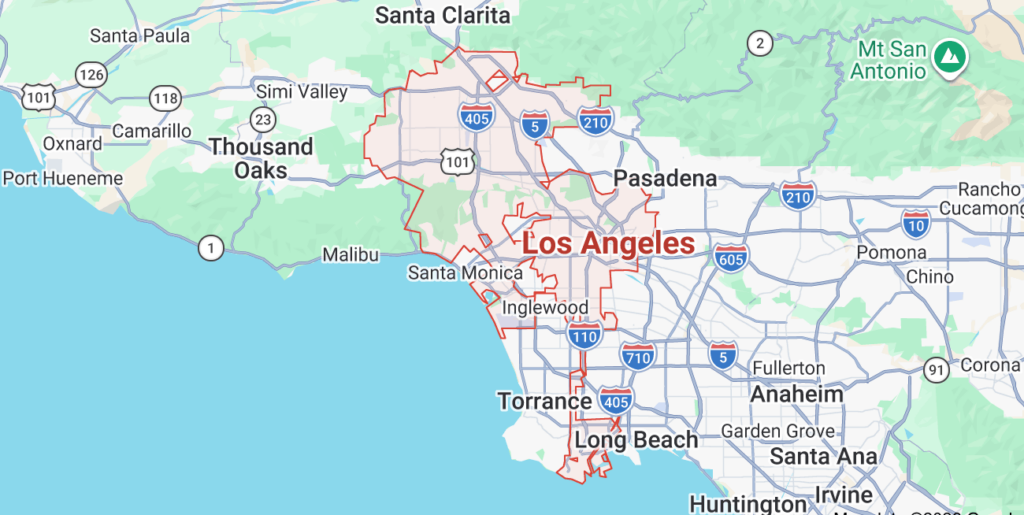
The Law Offices of Robert Wayne Pearce, P.A. represent investors throughout Los Angeles who have been harmed by investment fraud, securities fraud, and broker misconduct. Our attorneys have spent decades practicing law in this area, recovering for clients who were deceived by the financial professionals they trusted. Whether your case involves a dishonest financial advisor, unauthorized trades, or a fraudulent investment scheme, we have the experience and the resources to hold the responsible parties accountable.
What is investment fraud?
Investment fraud occurs when a financial professional deliberately deceives an investor to generate personal profit through illegal or unethical practices. This can take many forms, including making misleading statements about an investment’s potential returns, hiding risks or fees buried in the fine print, or executing trades in your account without your knowledge or approval. Securities fraud, as it is often called under both federal and California state law, covers any act of deception tied to the buying or selling of stocks, bonds, mutual funds, or other investment products. In serious cases, investment fraud can also be prosecuted as a criminal offense under both federal and California state law.
A common example is a broker who sells you high-commission variable annuities without ever disclosing the steep surrender charges you will face if you try to access your money early. These are not honest mistakes or market losses. They are deliberate violations of the rules that govern how financial professionals are supposed to treat you and your money.
What are the most common types of investment fraud in Los Angeles?
Los Angeles investors face several forms of investment fraud, including Ponzi schemes, churning, unauthorized trading, unsuitable investment recommendations, and broker misconduct. In many of these cases, a trusted financial advisor is the one responsible for the harm, using their position to profit at your expense.
Ponzi schemes
A Ponzi scheme is a type of investment fraud where returns paid to existing investors come entirely from money contributed by new investors rather than from any real profits. The scheme depends on a constant flow of new money to keep payouts going, and it inevitably collapses once that flow slows down or stops. In Los Angeles, these schemes often target tight-knit communities where trust runs high and skepticism runs low. A financial advisor might promise guaranteed returns of 15% or more with no risk, which should always raise a red flag under securities law.
Churning
Your broker may be buying and selling positions in your account over and over again, not because those trades benefit you, but because each transaction generates a commission for them. This practice is known as churning. Over time, the buying and selling racks up substantial fees that eat away at your portfolio’s value while producing little or no return.
Many victims only realize what happened after reviewing their account statements and noticing a pattern of constant, unexplained transactions they never requested. Brokerage firms have a legal obligation to supervise their brokers and flag this kind of activity, and when they fail to do so, both the broker and the firm can be held responsible.
Unauthorized trading
You may open your account statement one month and discover trades you never approved. Unauthorized trading happens when a broker executes buy or sell orders in your account without getting your permission first. This might mean purchasing risky products you never agreed to, liquidating positions you intended to hold, or moving your money into investments that serve the broker’s interests instead of yours.
You placed your trust in someone who was supposed to act on your behalf, and that trust was violated. One of the best ways to catch unauthorized activity early is to review your account statements carefully each month and compare the transactions listed against what you actually approved.
Unsuitable investment recommendations
Every financial professional has an obligation to recommend investments that align with your age, risk tolerance, income, and financial goals, especially when dealing with complex financial instruments that carry hidden risks. When a broker ignores those factors and puts you into products that do not fit your situation, that is an unsuitable recommendation and a violation of their fiduciary duty to act in your best interest.
A retired investor living on a fixed income, for example, should never be placed into high-risk hedge funds or speculative securities without full disclosure of the dangers involved. When unsuitable recommendations lead to losses, you may be able to recover damages through FINRA arbitration or a California state court claim.
Broker misconduct
Broker misconduct is a broad category that covers a range of unethical and illegal actions by financial professionals that cause harm to investors. This includes misrepresenting the risks of an investment, omitting material facts you needed to make an informed decision, hiding conflicts of interest, and failing to supervise other brokers within the same firm.
The financial losses caused by broker misconduct can be devastating, especially when they involve your retirement savings or your family’s long-term financial security. The Law Offices of Robert Wayne Pearce, P.A. will fight to recover what was taken from you through FINRA arbitration or California state court proceedings.
How do you know if you are a victim of investment fraud?
Not every investment loss is the result of fraud, but there are warning signs that should prompt you to take a closer look at what is happening in your account. If your portfolio has dropped sharply in value while the broader market has stayed flat or gone up, that disconnect may indicate that something other than normal market conditions caused your losses.
Other red flags include a financial advisor who avoids your phone calls, gives vague or evasive answers about your account performance, or discourages you from reviewing your own statements. Unexpected tax liabilities tied to trades you do not remember authorizing or unfamiliar fees appearing on your statements can also signal hidden misconduct. A significant financial loss that does not line up with what the rest of the market was doing during the same period deserves a closer look from an experienced attorney who understands securities law.
What California laws protect investors from securities fraud?
California investors are protected by a combination of state and federal laws designed to prevent fraud and hold bad actors accountable. At the state level, the Corporate Securities Law of 1968 governs the sale and trading of securities throughout California. Section 25400 of the California Corporations Code specifically prohibits deceptive trading practices, including wash trades, market manipulation, and the spread of false information intended to inflate or deflate a security’s value.
On the federal side, Rule 10b-5 under the Securities Exchange Act of 1934 makes it illegal to use fraud or deception in connection with the purchase or sale of any security. The Securities and Exchange Commission enforces these federal laws, while California’s own Department of Financial Protection and Innovation enforces state-level securities regulations. Together, these overlapping layers of California law and federal law give investors multiple avenues to pursue claims when fraud occurs.
What is the statute of limitations for investment fraud in California?
California gives you a limited window to file an investment fraud claim, and the exact deadline depends on the type of claim and when you discovered the fraud. Missing these deadlines can permanently bar your case regardless of how strong the evidence is, so acting quickly is one of the most important things you can do to protect your rights.
Under federal securities law, you must file your claim within two years of discovering the fraud or within five years of the date the violation actually occurred, whichever comes first. California state claims follow a similar structure, though the specific deadlines can vary depending on the type of fraud and the legal process you pursue.
If your claim falls under FINRA arbitration, you generally have six years from the date of the wrongful activity to file. Because these timelines overlap and interact in ways that can be difficult to sort out on your own, speaking with an attorney as soon as possible is the safest course of action.
How can a Los Angeles investment fraud lawyer help you recover your losses?
An investment fraud attorney handles every stage of your case so you can focus on moving forward while your legal team works to recover what was taken from you. That process starts with a thorough review of your account statements, trade confirmations, prospectuses, and any correspondence between you and your broker or financial advisor. Your attorney uses this information to identify exactly where the misconduct occurred and how much you lost as a result.
From there, your lawyer builds the strongest possible claim by gathering evidence, calculating your total damages, and determining which parties can be held liable, whether that is an individual broker, a brokerage firm, or both. Attorney Robert Pearce and his team specialize in going up against large financial institutions and getting results for our clients. Strong legal representation levels the playing field against large brokerage firms and gives you a real chance to seek justice and recover your money under applicable law.
What is FINRA arbitration and how does it work?
If your brokerage agreement includes a mandatory arbitration clause, your case will most likely be heard through the Financial Industry Regulatory Authority, known as FINRA. FINRA operates the primary forum for resolving securities disputes between investors and broker-dealers in the United States. Most brokerage agreements include clauses requiring disputes to go through FINRA arbitration rather than a traditional courtroom, so this is likely the path your case will follow if you were harmed by a registered broker or their firm.
The arbitration process begins when your attorney files a statement of claim outlining the misconduct and the damages you are seeking. A panel of arbitrators is then selected to hear both sides and review the evidence. Your attorney presents your case, including documentation of the fraud and testimony supporting your losses, and the panel issues a binding decision. Compared to traditional litigation, FINRA arbitration tends to move faster and cost less, which is one reason it has become the standard for resolving investor claims across the country.
Why choose the Law Offices of Robert Wayne Pearce for your investment fraud case?
Did you know that the Law Offices of Robert Wayne Pearce, P.A. have recovered over $185 million for investors who were victimized by fraud and broker misconduct? That track record reflects over 45 years of our experienced securities fraud attorneys going head to head with some of the largest brokerage firms and financial institutions in the country on behalf of people just like you.
We understand that discovering you have been defrauded can leave you feeling overwhelmed and unsure of what to do next. That is exactly why we offer a free consultation, so you can sit down with our attorneys, learn about your options, and make an informed decision about how to proceed without any financial pressure. Our firm has built a proven track record of results representing clients in FINRA arbitration and securities litigation cases nationwide, and we are ready to put that experience to work for you.
Investigations of Los Angeles, California Brokers by the Law Offices of Robert Wayne Pearce
The Law Offices of Robert Wayne Pearce, P.A. has identified several Los Angeles, California brokers: Fabian Chichester (Wells Fargo Clearing Services) who has three disclosed complaints, including allegations of unauthorized mutual fund purchases; all were denied by the firm. Gregory Baines Iglow (Oppenheimer & Co.) faces multiple disputes spanning municipal and corporate bonds, auction-rate securities, and Puerto Rican municipal bonds, alleging misrepresentation, fraud, breach of fiduciary duty, and negligence, with claimed damages reaching hundreds of thousands of dollars. Gregory Heller (Investment Security Corporation) has two complaints—one resolved through an arbitration award in the customer’s favor and another settled by the firm. Yuting Cheng (Northwestern Mutual Investment Services, formerly J.P. Morgan and Citigroup) also has two reported complaints, with allegations tied to prior employment as well. Across these cases, the recurring allegations involve unsuitable investment recommendations, misrepresentation or omission of material facts, breach of fiduciary duty, negligence, and unauthorized transactions—particularly involving complex or illiquid products like alternative investments, municipal bonds, and mutual funds.

Contact the Law Offices of Robert Wayne Pearce, P.A. to learn more about investment fraud in Los Angeles
If you lost money because of a dishonest broker, a deceptive financial advisor, or a fraudulent investment scheme in Los Angeles, you do not have to face this alone. Our legal team is ready to review your case, explain your rights, and help you pursue the compensation you deserve.
Do not wait until the statute of limitations runs out and your opportunity to file a claim disappears. We handle investment fraud cases on a contingency fee basis, which means you pay nothing unless we recover money for you. Call the Law Offices of Robert Wayne Pearce, P.A. today at (800) 732-2889 or send a secure message online for a free consultation and take the first step toward recovering your losses.