Category: Fraud & Misrepresentation

Real Estate LP Risks & Losses

A real estate limited partnership (RELP) is a securities offering that pools investor capital to acquire, develop, or manage real property, and is typically sold by broker-dealers and financial advisors to accredited investors seeking passive real estate income and tax benefits. Modern successors—Delaware Statutory Trusts (DSTs) and Tenants-in-Common (TIC) programs—have largely replaced traditional RELPs as the dominant vehicle for broker-sold, illiquid real estate investments. Every RELP has a general partner (GP) who manages operations and bears unlimited liability, and limited partners (LPs) who contribute capital but have no management authority. LPs receive distributions proportional to their equity share and report income, losses, and deductions on Schedule K-1. Minimum investments typically range from $25,000 to $250,000 or more, and holding periods run 5 to 15 years.

Keep Reading


Traded REIT Risks & Losses

A traded REIT (Real Estate Investment Trust) is a publicly listed company that owns, operates, or finances income-producing real estate and whose shares trade on a national stock exchange — such as the New York Stock Exchange or NASDAQ — allowing investors to buy and sell shares like any other publicly traded stock. They are required by federal law to distribute at least 90% of their taxable income to shareholders as dividends, which is why brokers and financial advisors frequently recommend them to retirees and conservative investors seeking current income. Traded REITs fall into three categories. Equity REITs own and operate physical properties — apartments, office buildings, shopping centers, warehouses, healthcare facilities, and data centers — and generate revenue primarily from rent collected from tenants. Mortgage REITs (mREITs) do not own property directly; they lend money to real estate owners or invest in mortgage-backed securities and earn income from the spread between their borrowing costs and lending returns. Hybrid REITs combine both property ownership and mortgage financing, creating simultaneous exposure to rental income risk and interest rate spread risk.

Keep Reading

Venture Capital Fund Risks & Losses

A venture capital fund is a pooled private investment vehicle — typically structured as a limited partnership — that raises capital from investors and deploys it into early-stage, high-growth private companies in exchange for equity stakes. These funds are managed by a general partner (GP), usually an investment firm or professional fund manager, who controls all investment decisions. Investors participate as limited partners (LPs), commit capital on the GP's terms, and have no role in day-to-day fund management. Venture capital funds are sold primarily to accredited investors — individuals with a net worth exceeding $1 million (excluding their primary residence) or annual income above $200,000 ($300,000 jointly with a spouse). Most funds are structured under Section 3(c)(1) of the Investment Company Act of 1940, which exempts them from SEC registration but limits participation to 100 investors. Larger funds relying on Section 3(c)(7) restrict access to "qualified purchasers" — generally individuals with at least $5 million in investments.

Keep Reading

VelocityShares 3x Long Crude Oil ETN (UWTI) – Risks for Investors and Loss Recovery Options

Three-times leveraged crude oil exchange-traded notes have destroyed billions of dollars in investor wealth, and the regulatory trail of enforcement actions, arbitration awards, and warnings stretching from 2009 to 2026 makes clear these instruments were never designed for the retail investors who bought them. The VelocityShares 3x Long Crude Oil ETN (UWTI) — once one of the most actively traded securities in America — lost more than 99% of its value before its successor product was forcibly liquidated during the 2020 oil crash. Investors who held these products in retirement accounts, on broker recommendations, or without understanding the daily-reset mechanism suffered catastrophic losses. FINRA and the SEC have repeatedly stated that leveraged ETNs are typically unsuitable for buy-and-hold investors, and enforcement actions totaling tens of millions of dollars confirm that brokers and firms routinely violated these guidelines. Investors who suffered losses from leveraged crude oil ETNs may have legal recourse through FINRA arbitration.

Keep Reading

Master Limited Partnership Risks & Losses for Investors

A master limited partnership (MLP) is a publicly traded limited partnership that combines partnership tax benefits with exchange-traded liquidity, and is typically sold by brokers and financial advisors to retail investors seeking high-yield income from the energy sector. Most MLPs operate energy infrastructure—pipelines, storage terminals, processing plants, and gathering systems for oil, natural gas, and natural gas liquids. Major issuers include Enterprise Products Partners, Energy Transfer, MPLX, Plains All American Pipeline, and Western Midstream Partners. An MLP has two classes of partners: the general partner (GP) manages operations and typically holds a 2% stake, while the limited partners (LPs) provide capital but have no management control.

Keep Reading

Derivative Securities – Risks for Investors and Loss Recovery Options

Derivative securities are financial contracts whose value is derived from the performance of an underlying asset, index, or rate. They are typically sold or recommended by brokers, financial advisors, commodity trading advisors, and online trading platforms to retail investors in brokerage accounts, retirement accounts, and margin accounts.

Keep Reading

Closed-End Funds – Risks for Investors and Loss Recovery Options

A closed-end fund (CEF) is a type of investment company that raises capital through a one-time initial public offering, issues a fixed number of shares, and then trades on a stock exchange at market prices that may differ from the fund’s net asset value (NAV). Brokers and financial advisors at firms like UBS, Merrill Lynch, Morgan Stanley, Raymond James, and Edward Jones routinely recommend CEFs to retail investors—particularly retirees—seeking income.

Keep Reading

Collateralized Loan Obligations (CLOs) – What Investors Need to Know About Hidden Risks, Unsuitable Recommendations, and Their Legal Rights

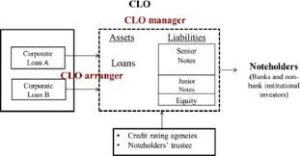
If your broker or financial advisor recommended Collateralized Loan Obligations—commonly called CLOs—and you have suffered significant investment losses, you are not alone. CLOs have become one of the fastest-growing and most aggressively marketed products in the retail investment landscape, with the U.S. CLO market now exceeding $1.13 trillion in outstanding issuance. Unfortunately, the explosive growth of CLO-focused exchange-traded funds (ETFs) and closed-end funds has pulled everyday investors into a corner of finance historically reserved for sophisticated institutions, often with devastating results. At the Law Offices of Robert Wayne Pearce, P.A., we have recovered over $185 million for investors harmed by unsuitable recommendations, broker misconduct, and failure to disclose material risks. Attorney Robert Wayne Pearce has more than 45 years of experience representing investors in FINRA arbitration and securities litigation involving complex structured products, and he is prepared to evaluate your CLO-related losses at no cost.

Keep Reading
1 2 3 4 … 8