
Alternative investments are assets outside traditional stocks, bonds, and cash. They include private equity, real estate, commodities, hedge funds, and other investments that provide exposure to different markets.
Investors use these assets to diversify their portfolios and pursue returns beyond conventional investments. However, alternative investments often come with higher fees, limited liquidity, and stricter investor requirements.
In this guide, we’ll explain the different types of alternative investments, their benefits and risks, and how to invest in them. We’ll also cover your legal options for recovering losses caused by investment misconduct.
What Are Alternative Investments?
Alternative investments are financial or physical assets outside traditional investment categories such as publicly traded stocks, bonds, and cash. Common examples include private equity, real estate, hedge funds, commodities, and private credit.
These investments generally involve either direct ownership of an asset or participation in a professionally managed investment fund.
For example, buying shares of Apple gives an investor ownership in a publicly traded company. Investing in private equity, on the other hand, provides an ownership interest in a privately held business, either directly or through a fund.
Alternative investments can vary quite a bit in their requirements and how they work. Some require substantial minimum investments, while others are accessible to everyday investors. They also differ in how assets are valued, how easily they can be sold, and which regulatory requirements apply.
These factors can help investors decide whether a particular alternative investment fits their financial goals and circumstances.
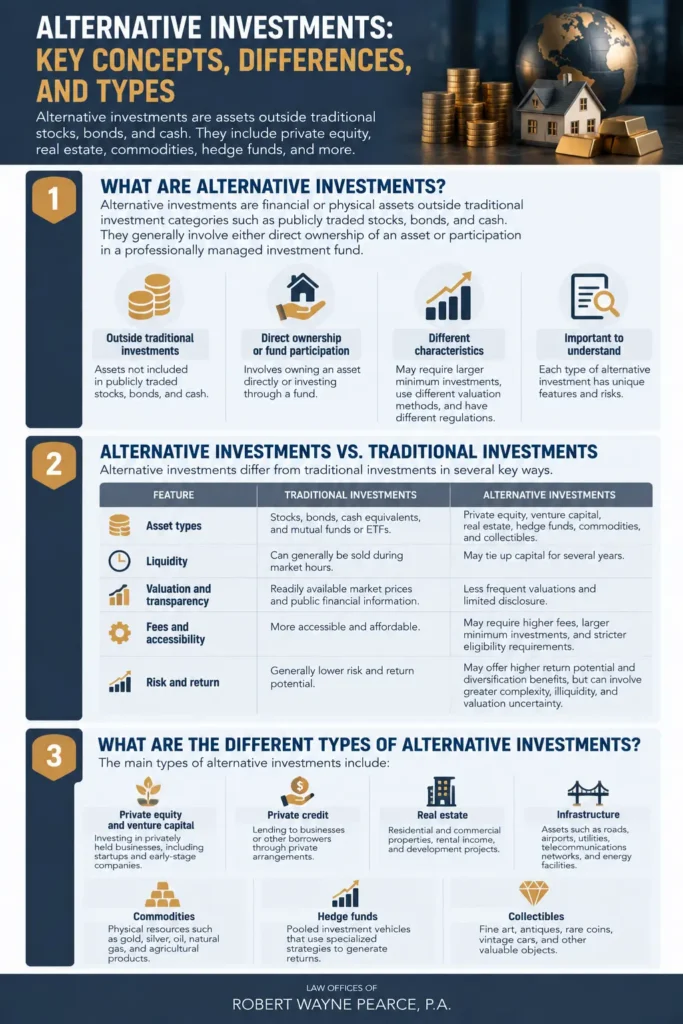
Alternative Investments vs. Traditional Investments
Alternative investments differ from traditional investments in their liquidity, valuation methods, fees, accessibility, and underlying assets. Traditional investments generally include publicly traded stocks and bonds, while alternatives often involve private assets or specialized investment strategies.
The main differences include:
- Asset types: Traditional investments include stocks, bonds, cash equivalents, and mutual funds or ETFs. Alternatives include private equity, venture capital, real estate, hedge funds, commodities, and collectibles.
- Liquidity: Publicly traded stocks can generally be sold during market hours, while private investments may tie up capital for several years.
- Valuation and transparency: Traditional investments have readily available market prices and public financial information. Private investments often have less frequent valuations and limited disclosure.
- Fees and accessibility: Traditional investments are more accessible and affordable. Alternatives may require higher fees, larger minimum investments, and stricter eligibility requirements.
- Risk and return: Alternatives may offer higher return potential and diversification benefits, but can involve greater complexity, illiquidity, and valuation uncertainty.
Alternative investments can respond differently to economic conditions and stock market movements. So, they create more opportunities for diversification. However, the benefits depend on the assets involved and their performance under different market conditions.
What Are the Different Types of Alternative Investments?
The main types of alternative investments include private equity, venture capital, private credit, real estate, infrastructure, commodities, hedge funds, and collectibles.
Each investment type operates differently, and some involve considerably more complexity than others.
- Private equity and venture capital: Private equity involves investing in privately held businesses, often with the goal of improving their operations and eventually selling them for a profit. Venture capital is a form of private equity that focuses on startups and early-stage companies with significant growth potential. Investors typically participate through specialized funds, although direct investments are also possible.
- Private credit: Private credit involves lending money to businesses or other borrowers through privately negotiated arrangements outside traditional bank lending channels. Investors generally earn returns through interest payments and the repayment of principal. These investments may include direct lending, mezzanine financing, and distressed debt.
- Real estate: Real estate investments include residential rental properties, commercial buildings, apartment complexes, and property development projects. Investors can purchase properties directly or participate through real estate investment funds and partnerships. Returns may come from rental income, property appreciation, or proceeds from development projects.
- Infrastructure: Infrastructure investments involve assets that provide essential services, such as roads, airports, utilities, telecommunications networks, and energy facilities. Investors may receive income from usage fees, long-term contracts, or other revenue arrangements associated with operating these assets.
- Commodities: Commodities include physical resources such as gold, silver, oil, natural gas, and agricultural products. Investors can purchase certain commodities directly or gain exposure through futures contracts, commodity funds, and other financial instruments. Their value is influenced by supply, demand, and global economic conditions.
- Hedge funds: Hedge funds are pooled investment vehicles that employ specialized strategies to generate returns. Depending on their investment objectives, managers may use leverage, derivatives, short selling, and other techniques to trade financial markets. These funds often have substantial minimum investments and restrictions on withdrawals.
- Collectibles: Collectible investments include fine art, antiques, rare coins, vintage cars, and other valuable objects. Their value depends on factors such as rarity, condition, authenticity, and demand among buyers. Investors generally earn returns by selling these assets at a higher price than they originally paid.
And because these assets generate returns in different ways, their liquidity, ownership structures, and investment requirements can vary considerably.
What Are the Benefits of Alternative Investments?
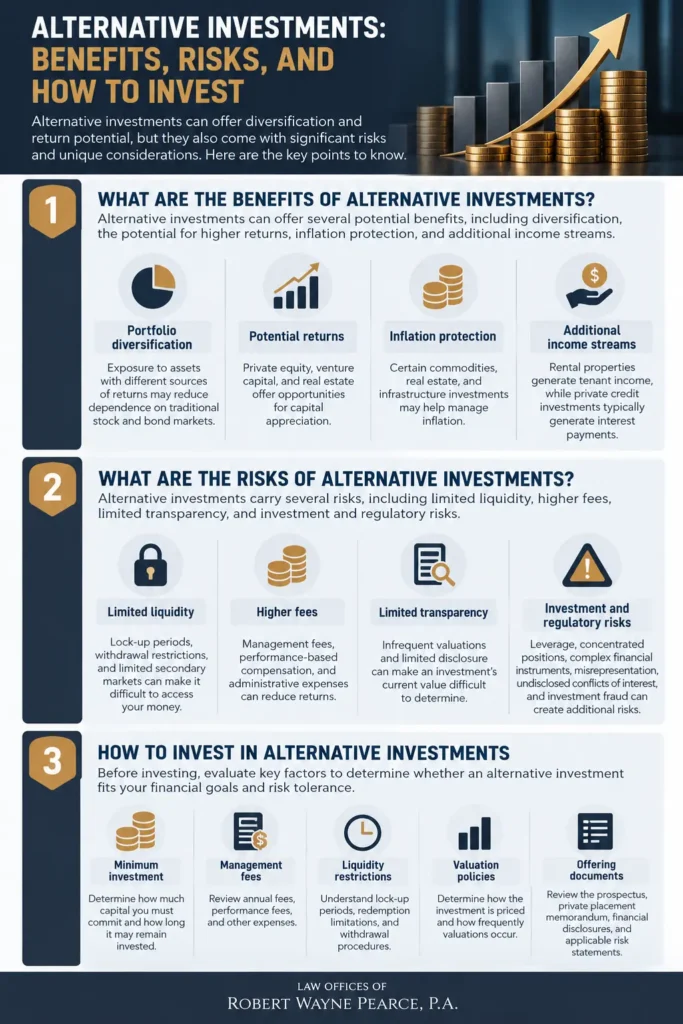
Alternative investments may offer several benefits, including portfolio diversification, capital appreciation, inflation protection, and additional income opportunities.
The potential benefits depend on the asset class, investment strategy, and prevailing market conditions.
- Portfolio diversification: Alternative investments provide exposure to assets with different sources of returns. For example, rental properties generate income from tenants, while publicly traded stocks depend on corporate earnings and market conditions. Combining different assets may reduce your portfolio’s dependence on traditional stock and bond markets.
- Potential returns: Private equity, venture capital, and real estate investments offer opportunities for capital appreciation. Investors may benefit when a private company expands, a startup becomes successful, or a property’s market value increases.
- Inflation protection: Certain alternative assets, including commodities such as gold and oil, may help investors hedge against inflation. Some real estate and infrastructure investments also have revenues that adjust with inflation, potentially helping preserve their purchasing power.
- Additional income streams: Some alternative investments generate recurring payments. Rental properties provide income from tenants, while private credit investments typically generate interest payments from borrowers.
However, these benefits vary substantially between investments. An asset that performs well during one economic cycle may experience significant losses during another.
And while diversification can help manage certain risks, alternative investments can also introduce additional exposure to market downturns, leverage, and illiquidity.
What Are the Risks of Alternative Investments?
The main risks of alternative investments include limited liquidity, higher fees, complex investment structures, valuation uncertainty, and the possibility of substantial financial losses.
Some alternative investments carry significantly greater risks than traditional securities, especially when investors have limited access to financial information.
The most common risks include:
- Limited liquidity: Many alternative investments have lock-up periods, withdrawal restrictions, or limited secondary markets. This can make it difficult to access your money when you need it. Some private funds require investors to hold their positions for several years before receiving distributions.
- Higher fees: Alternative investment funds may charge annual management fees, performance-based fees, and additional administrative expenses. These costs reduce net returns, and their impact can be more noticeable when an investment performs poorly.
- Limited transparency: Privately held assets often lack the continuous market pricing and public reporting associated with exchange-traded securities. Investors may receive periodic valuations based on estimates or financial models, making it more difficult to determine an investment’s current value.
- Investment and regulatory risks: Alternative investment strategies may involve leverage, concentrated positions, and complex financial instruments. Private offerings can also have different disclosure obligations and investor protections than registered public offerings. Misrepresentation, undisclosed conflicts of interest, and investment fraud present additional concerns.
Consider an investor who places $100,000 into a private investment fund and unexpectedly needs the money for an emergency.
If the fund restricts withdrawals, the investor may be unable to access those savings for months or even years.
The SEC specifically warns that private placements can involve substantial liquidity restrictions, limited disclosure, and the possibility of losing your entire investment.
How to Invest in Alternative Investments
Investors can access alternative investments by purchasing assets directly, such as rental properties, physical gold, or collectible artwork, or by investing through professionally managed funds, including private equity, private credit, and hedge funds.
Some private offerings are available only to accredited investors. Certain interval funds and tender-offer funds may offer broader access to alternative assets, though they come with restrictions on when and how much investors can withdraw.
Before investing, we recommend reviewing the following:
- Minimum investment: Determine how much capital you must commit and how long it may remain invested.
- Management fees: Review annual fees, performance fees, and other expenses.
- Liquidity restrictions: Understand lock-up periods, redemption limitations, and withdrawal procedures.
- Valuation policies: Determine how the investment is priced and how frequently valuations occur.
- Offering documents: Review the prospectus, private placement memorandum, financial disclosures, and applicable risk statements.
Tip: If a financial advisor recommends an alternative investment, ask them to explain how they are compensated and whether they receive additional commissions or incentives for selling that product.
Are Alternative Investments Right for You?
Alternative investments may be a good fit for investors with a long-term investment horizon, sufficient available capital, and the ability to tolerate potential losses and limited liquidity. The right choice depends on each investor’s financial situation, investment goals, and risk tolerance.
For example, an investor with a 15-year investment horizon who does not need immediate access to their capital may feel comfortable committing a portion of their portfolio to a private equity fund.
But someone who needs access to their savings within the next year would be better served by more liquid investments.
Before investing, review your portfolio concentration, potential losses, and future cash requirements. A qualified financial advisor can also help determine how alternative investments fit into your overall financial strategy.
How to Seek Restitution for Alternative Investment Losses
Investors who lose money through alternative investment fraud, misrepresentation, or other actionable misconduct may be entitled to seek financial recovery through FINRA arbitration, civil litigation, or other applicable legal remedies.
At the Law Offices of Robert Wayne Pearce, P.A., we represent investors who have suffered financial losses involving securities fraud, broker misconduct, and other investment-related wrongdoing.
If you suspect misconduct contributed to your alternative investment losses, preserve your account statements, offering documents, investment agreements, and communications with the parties involved.
We recommend consulting an experienced securities attorney to evaluate your circumstances and determine which legal remedies may be available.