Category: Financial Products

Penny Stocks: What are the Risks and Your Legal Rights after suffering losses?

Penny stocks are equity securities trading below $5 per share, typically on over-the-counter (OTC) markets rather than major exchanges like the NYSE or Nasdaq. The SEC defines them under Securities Exchange Act Rule 3a51-1 and subjects them to heightened disclosure and suitability requirements because of the outsized risks they pose to retail investors. Most penny stocks trade through OTC Markets Group, which oversees more than 12,000 securities across a tiered marketplace. The OTCQX Best Market requires audited financials and excludes penny stocks entirely. The OTCQB Venture Market requires a minimum $0.01 bid price and current reporting. Below these, the Pink Market and Grey Market house securities with limited or no public disclosure—many have no audited financial statements and no obligation to report to the SEC.

Keep Reading

Delaware Statutory Trusts – Risks for Investors and Loss Recovery Options

A Delaware Statutory Trust (DST) is a passive real estate investment vehicle structured as a Regulation D private placement that allows investors to purchase fractional ownership interests in institutional-grade commercial properties. DSTs are most commonly used as replacement properties in IRC Section 1031 tax-deferred exchanges, and they are sold exclusively through registered broker-dealers and financial advisors to accredited investors—primarily retirees who have recently sold rental or investment real estate. If you lost money on a Delaware Statutory Trust due to a broker’s unsuitable recommendation, failure to disclose material risks, or inadequate due diligence on the DST sponsor, you may have a viable claim to recover those losses.

Keep Reading

Risks of Oil & Gas Limited Partnerships and Direct Participation Programs: Understanding Problems and Fraud Patterns, and Your Rights as an Investor

Three distinct categories of oil and gas partnerships carry vastly different risk profiles. Income wells (stripper wells) invest in proven, producing wells and carry lower risk but limited upside. Developmental wells drill near proven reserves at moderate risk. Exploratory wells (wildcats) drill in unproven territory and carry the highest risk — historical failure rates exceed 80% for exploratory drilling — but offer the largest potential tax deductions. This risk gradient is critical to suitability analysis, yet brokers frequently blur these distinctions when selling to investors.

Keep Reading

Options Trading Losses – Broker Fraud Risks for Investors and Loss Recovery Options

Options trading fraud is one of the most pervasive and financially devastating forms of investment misconduct targeting retail investors today. The Law Offices of Robert Wayne Pearce, P.A. has spent more than 40 years recovering losses for investors victimized by unsuitable options recommendations and broker churning—including a landmark $6,138,000 FINRA arbitration award against UBS Financial Services in February 2026.

Keep Reading

Margin Accounts – Risks for Investors and Loss Recovery Options

Margin amplifies losses by the same factor it amplifies gains. If you invest $50,000 in stock with $25,000 of your own money and $25,000 borrowed, a 30% decline does not cost you 30%—it costs you 60% of your equity. A 50% decline wipes out your entire investment, and you still owe the broker the full loan balance plus accrued interest. The SEC has warned investors that “you can lose more funds than you deposit in the margin account.” This is not a theoretical risk. During rapid market declines—March 2020, early 2022, and the periodic single-stock crashes that occur every year—margin investors routinely lose more than their original capital.

Keep Reading

Risks of Exchange Traded Funds and Investor Rights for Losses

What Are Exchange-Traded Funds? Exchange-traded funds (ETFs) are investment funds that trade on stock exchanges like individual shares, holding baskets of securities such as stocks, bonds, or commodities. Standard index ETFs—products like the SPDR S&P 500 ETF (SPY) or Invesco QQQ—are among the most widely held investments in the world. They offer low costs, diversification, and transparency. But a subset of ETFs carries risks that most investors do not understand. Leveraged ETFs use derivatives and debt to amplify an index’s daily return by 2x or 3x. Inverse ETFs deliver the opposite of an index’s daily return. Leveraged inverse ETFs combine both features, targeting -2x or -3x daily performance. These products are issued by firms such as ProShares, Direxion, and GraniteShares, and are sold through broker-dealers and online platforms to retail investors—including retirees and conservative savers who have no business owning them.

Keep Reading

Risks of Indexed Annuities and Investors’ Rights For Losses

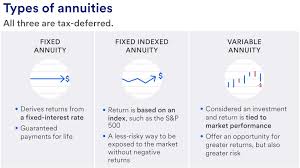
Indexed annuities are among the most aggressively marketed financial products in the United States. In 2024 alone, total indexed annuity sales—combining fixed indexed annuities (FIAs) and registered index-linked annuities (RILAs)—exceeded $192 billion, according to LIMRA. For many retirees, the pitch sounds irresistible: market-linked growth with no downside risk, guaranteed income for life, and an upfront bonus just for signing up. But behind these promises lie complex contractual limitations, punitive surrender charges that can lock up your savings for a decade or more, and a long history of regulatory enforcement actions against the companies and brokers who sell them.

Keep Reading

Market-Linked Notes: What are the Risks and Your Legal Rights?

What Are Market-Linked Notes? Market-linked notes are structured debt securities issued by major banks whose returns are tied to the performance of an underlying reference asset—such as a stock index, individual equity, commodity, or currency—rather than a fixed interest rate. They are typically sold by broker-dealers and financial advisors to retail investors seeking higher yields than traditional bonds or CDs can provide. Each note combines a bond component with an embedded derivative, usually an option, that determines the investor’s payout at maturity. The bond component funds the note’s structure, while the derivative links returns to the reference asset’s price movement. Common variants include buffered notes, barrier notes, enhanced return notes, leveraged notes, digital notes, and trigger notes—each with different levels of downside exposure and upside participation.

Keep Reading

Business Development Companies (BDCs) – Risks, Losses, and Legal Options

What Investors Need to Know About the Risks, Losses, and Legal Options Business development companies, commonly known as BDCs, are a type of closed-end investment fund that lends money to small and mid-sized private businesses. They were created by Congress in 1980 to channel capital to growing American companies, and they have been marketed aggressively to individual investors as high-yield income investments. With advertised dividend yields often ranging from 8% to 13%, BDCs can appear attractive to investors seeking steady income in retirement or as an alternative to traditional bonds. But BDCs are not bonds. They are complex, high-risk, leveraged credit vehicles that expose investors to below-investment-grade borrower defaults, severe illiquidity, opaque valuations, and fee structures that heavily favor fund managers over shareholders. Many investors have suffered devastating losses in BDC products—including those offered by Prospect Capital and FS Investments (formerly Fifth Street Finance)—after being told these products were “safe” or “like bonds.”

Keep Reading

Variable Annuities: Hidden Fees, Unsuitable Sales, and Your Legal Rights

If a financial advisor or broker sold you a variable annuity — especially inside an IRA or other retirement account — you may have paid far more than you realized. Variable annuities routinely carry total annual costs of 2.5% to 3.5% or more, distributed across multiple fee layers that are rarely explained at the point of sale. On a $500,000 account, that fee drag can cost you hundreds of thousands of dollars over a 20-year retirement — money that compounds in the insurance company's pocket rather than yours. Worse, for retirees who hold a variable annuity inside an IRA, the product's primary selling point — tax-deferred growth — is entirely redundant. The IRA already provides that benefit. The SEC has stated this plainly. FINRA has warned brokers about it for decades. And yet the unsuitable sales continue, because the commissions are too large and the oversight too inconsistent.

Keep Reading